
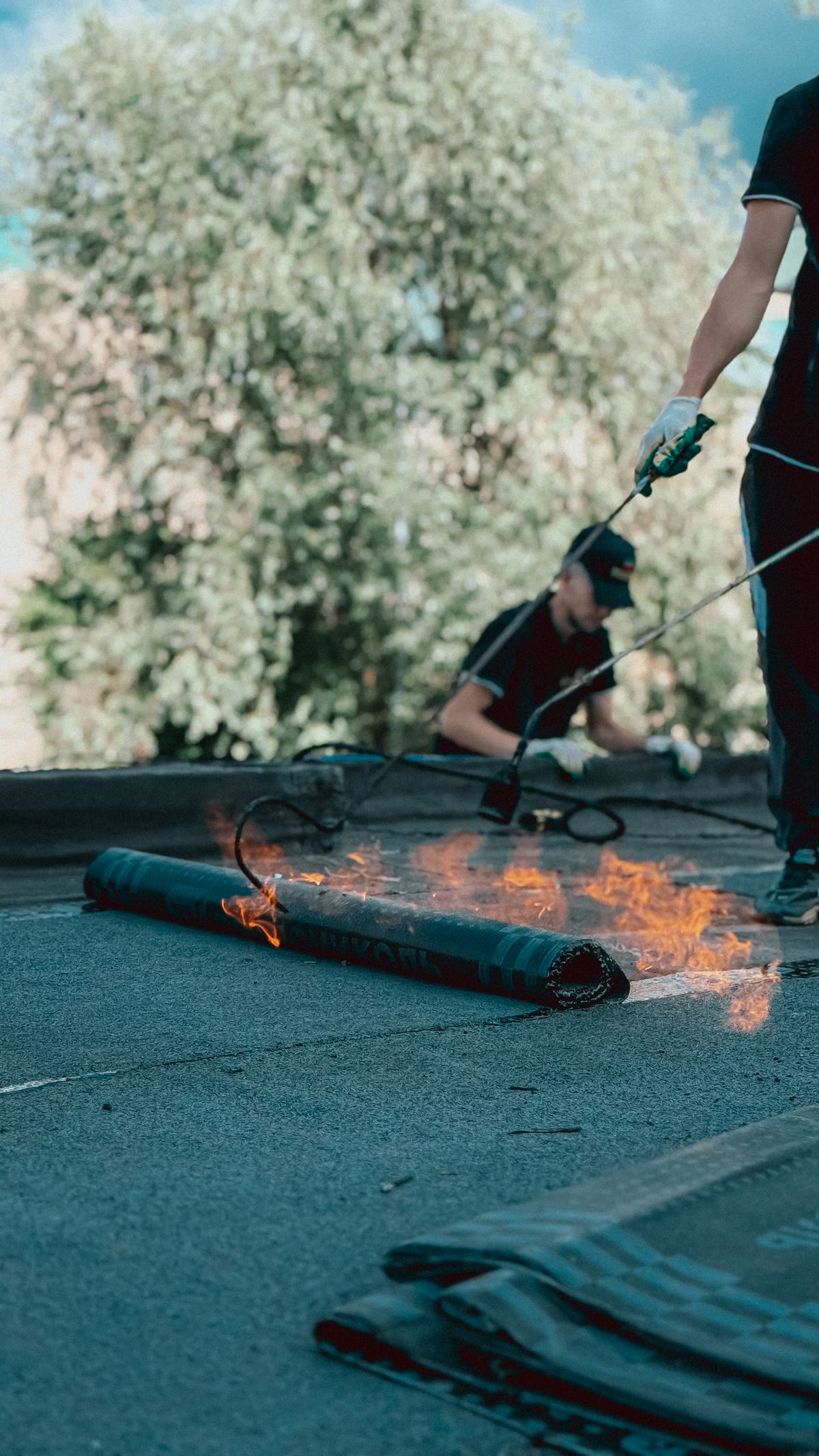
Single-ply Thermoplastic Polyolefin (TPO) roofing has become one of the most widely specified roofing materials across North America. However, industry data shows that over 80% of single-ply roof failures occur at improperly welded seams rather than within the membrane field.
Understanding the technical precision required for hot-air seam welding is essential for property managers and commercial building owners seeking a 20+ year roof system.
The Chemistry of Hot-Air Fusion Welding
TPO is a thermoplastic polymer. When heated to approximately 600°F–800°F (depending on ambient temperature, humidity, and welder speed), the polymer chains on adjoining sheet surfaces melt and intertwine. Under calibrated pressure from a silicone roller, the two sheets fuse into a single monolithic layer.
A properly executed hot-air weld has greater tensile and shear strength than the un-welded membrane sheet itself.
Critical Variables in Seam Welding Execution
- Temperature & Speed Calibration: Test welds must be performed each morning and afternoon as ambient weather changes. A “cold weld” looks sealed on the surface but peels apart under stress; an “over-welded” seam burns and thins the polymer backing.
- Surface Cleanliness: Any dust, airborne oil, condensation, or morning marine layer moisture on the weld area acts as a bond breaker and must be wiped with specialized TPO solvent cleaner before heat application.
- Robotic Automated Welders: On large roof fields, self-propelled robotic hot-air welders maintain constant speed, temperature, and tracking pressure, eliminating human fatigue and inconsistency.
- Daily Seam Probing: Quality control requires physical mechanical probing along 100% of field and detail seams using a blunt cotter-pin probe to verify zero micro-voids.
Flashings, Corners & Terminations
Detail work around HVAC curbs, scupper drains, pipe boots, and parapet walls requires skilled hand-welding with high-temperature heat guns and detail rollers. Pre-fabricated, factory-molded TPO pipe boots and inside/outside corner patches provide superior long-term waterproofing compared to field-fabricated details.
A-1 All American Roofing’s technicians are factory-trained and certified by leading TPO manufacturers including GAF, Johns Manville, and Carlisle SynTec.
Topic Tags
A-1 All American Roofing Team
Licensed and bonded California roofing contractors serving Los Angeles County, Carson, Paramount, and the South Bay with over decades of technical roofing experience. CSLB License # 1130235.